Dive 1
Site: Windmill Beach
Max Depth: 8.4 metres
Bottom Time: 82 minutes
Surface Temperature: 16°C
Bottom Temperature: 16°C
Visibility: 5 metres
The plan was to dive the day before, the 24th, but I had not put my camera’s battery into the charger correctly, so only dive the next day. And it was a rather misty day, all the way down to Windmill Beach. It made it a bit difficult to tell what the visibility would be, but there would be no sun beams in the kelp, so I decided that it would be a macro dive, a good chance to test the Nauticam SMC-1 on the Canon G7X II in the ocean for the first time. And it was a lot harder than I had expected.
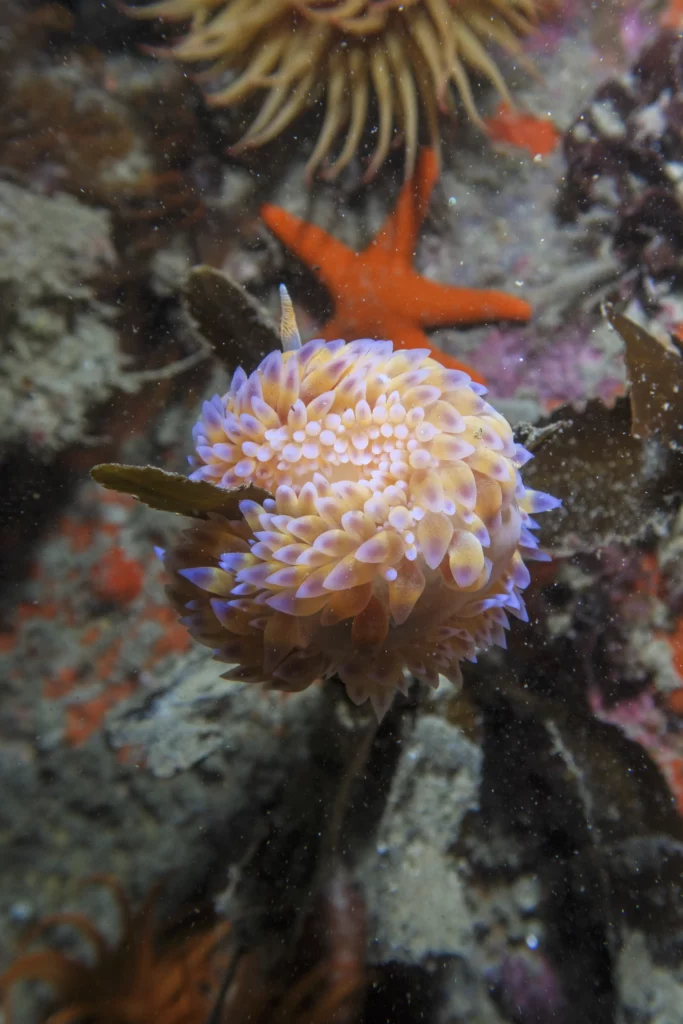
There were some black nudibranchs (Tambja capensis), and gasflamae nudibranchs (Bonisa nakaza), but none that I really thought were in interesting positions for interesting photos, mostly on a flat surface that would require me to place my camera on the substrate to get a front-on view of the nudibranch.
It was a macro dive, so I needed to actually get some super macro on something. I found some Stephens codium green algae, which often has some very small dendritic nudibranchs on it. I wasn’t able to find any, unfortunately, but i did find a small snail that served it spurpose to demonstrate the magnification capabilities.
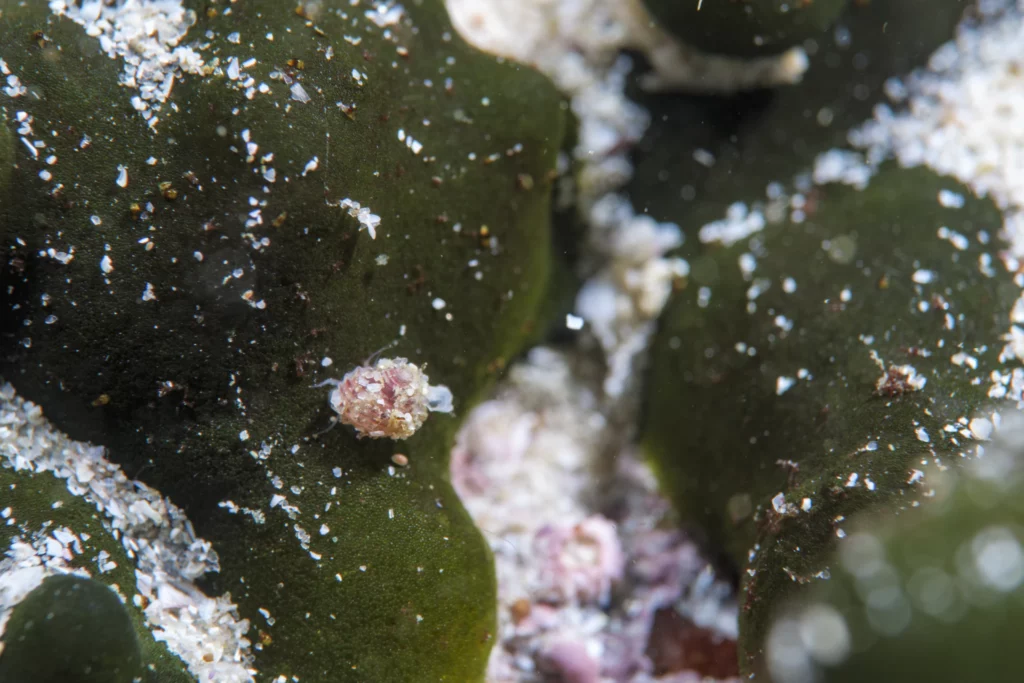
It seems like the magnification of the SMC-1 on the Canon G7X II is less than that of the Canon G16, but I will need to do some testing to determine that.
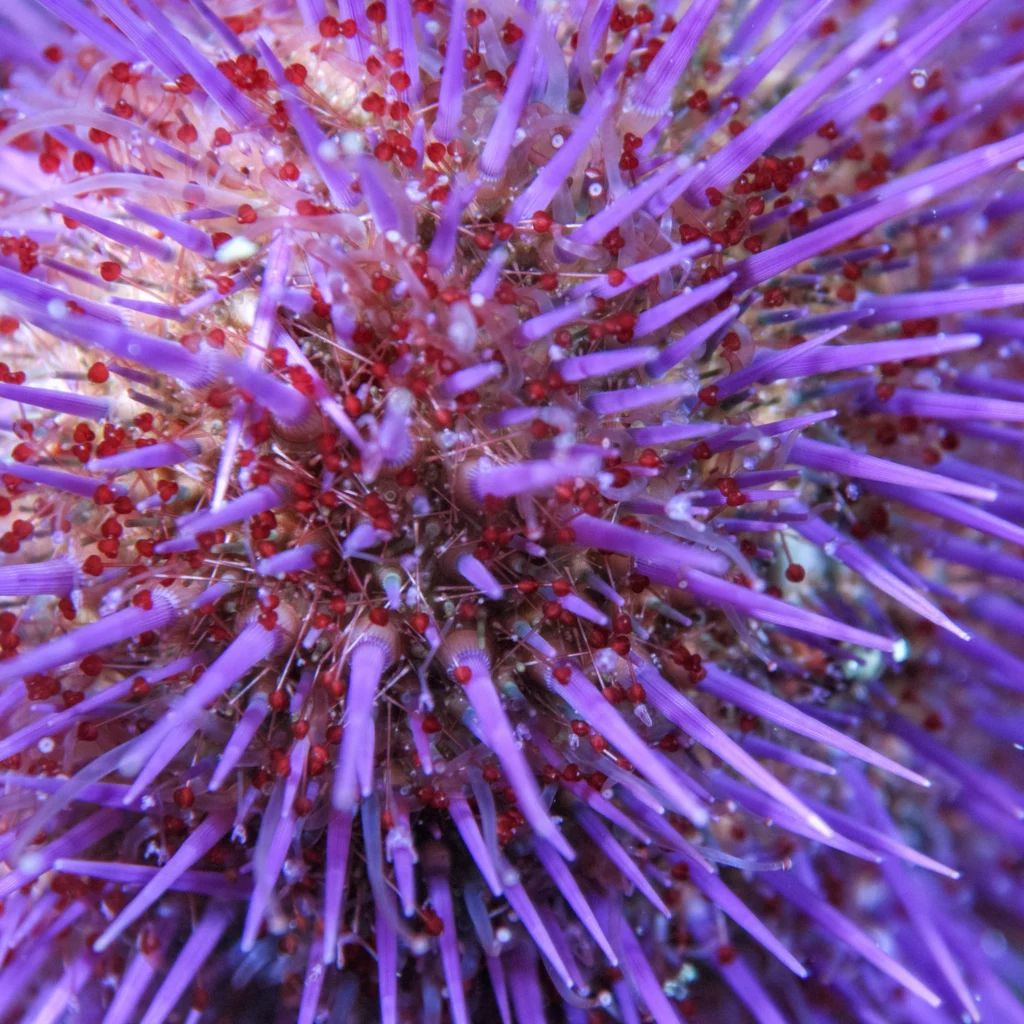
I had photographed the close-up of a starfish before, which revealed some very interesting details, and i decided to get up close to a different spikey echinoderm, the cape sea urchin (Parechinus angulosus).
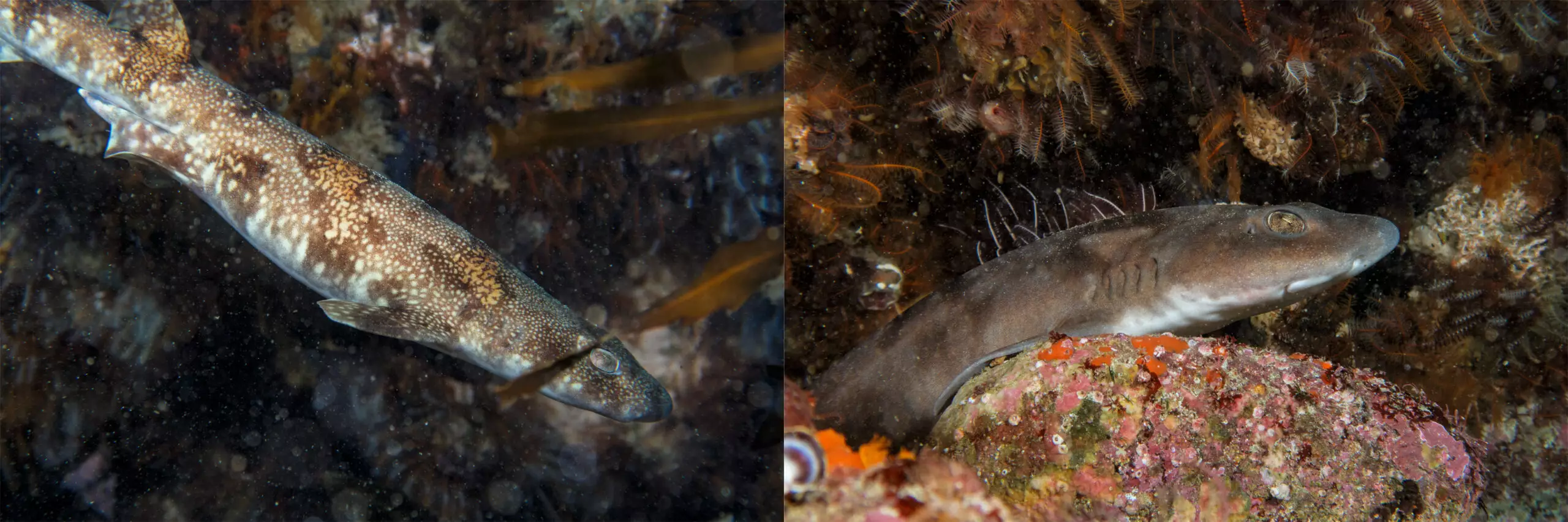
What I should have actually done was disregard my macro ideas before going in and attaching my wide-angle lens. Lots of shysharks, as well as lots of eggs. We came across a sort of little cave at some point in the dive, and it was a bit of a slumber party of dark shysharks (Haploblepharus pictus) and puffadder shysharks (Haploblepahrus edwardsii)
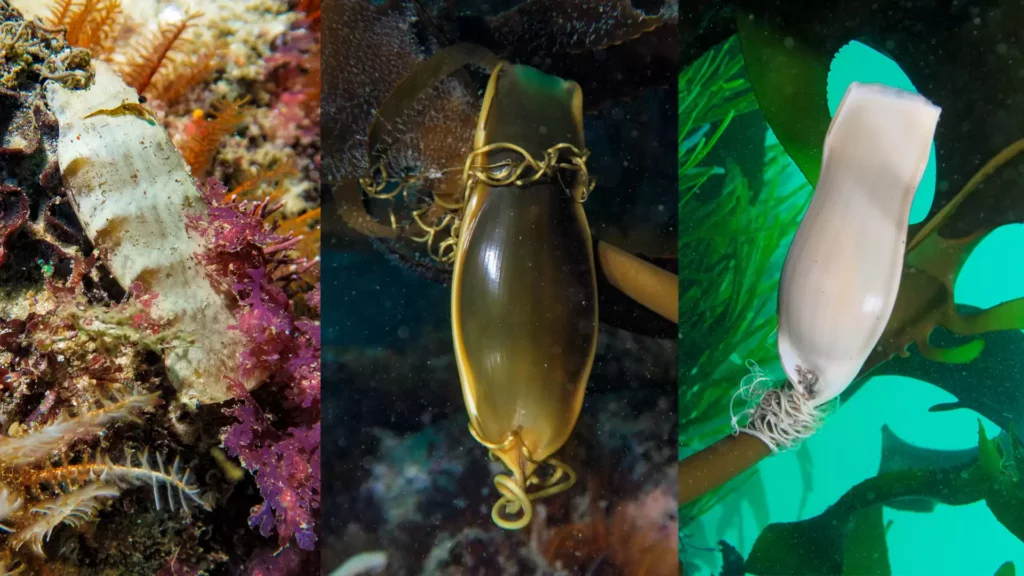
Along with the sharks that were present were many of their egg cases. I managed to find 3 species: puffadder shyshark, pyjama shark, and leopard catshark. Interestingly enough, I do not ever recall seeing the eggs of a dark shyshark before in False Bay. I have found many in Mossel Bay; however, they are a single dark colour and larger than those of the puffadder shyshark.
All in all, a pleasant dive with lots of life to see, next time I will take my wide-angle setup into the kelp forest.
Dive 2
Site: (Long Beach/Ferro Wreck)
Max depth: 11.5 metres
Bottom time: 71 minutes
Surface Temperature: 17°C
Bottom Temperature: 16°C
Visibility: 4 metres
The objective of the dive was to get to the Ferro Wreck (ferro as in ferroconcrete, the material that the yacht was made out of). To get there, the instructions are to travel at 141° magnetic from the end of the pipeline. The Wikivoyage page has a lot more information about the wreck and Long Beach as a whole.
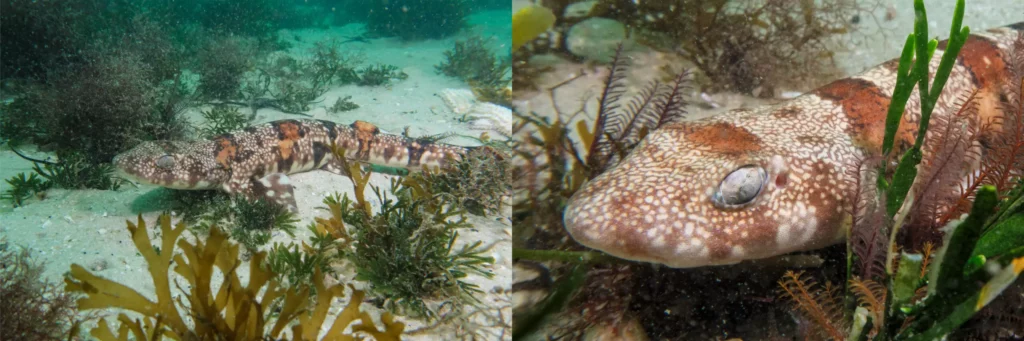
The swim from the end of the pipe to the wreck is 74m, a gently sloping flat of algae, and holes in the sand, home to many of the prawns, whose carapaces can be seen strewn on the sands. On the way to the wreck were many shysharks, puffadders and darks, resting on the bottom. I even managed to spot a very young dark shyshark. It was difficult to photograph them, as we were swimming at a steady pace to get to the wreck to maximise our time at the site, and the constantly changing mist conditions above kept changing the light coming down from above.
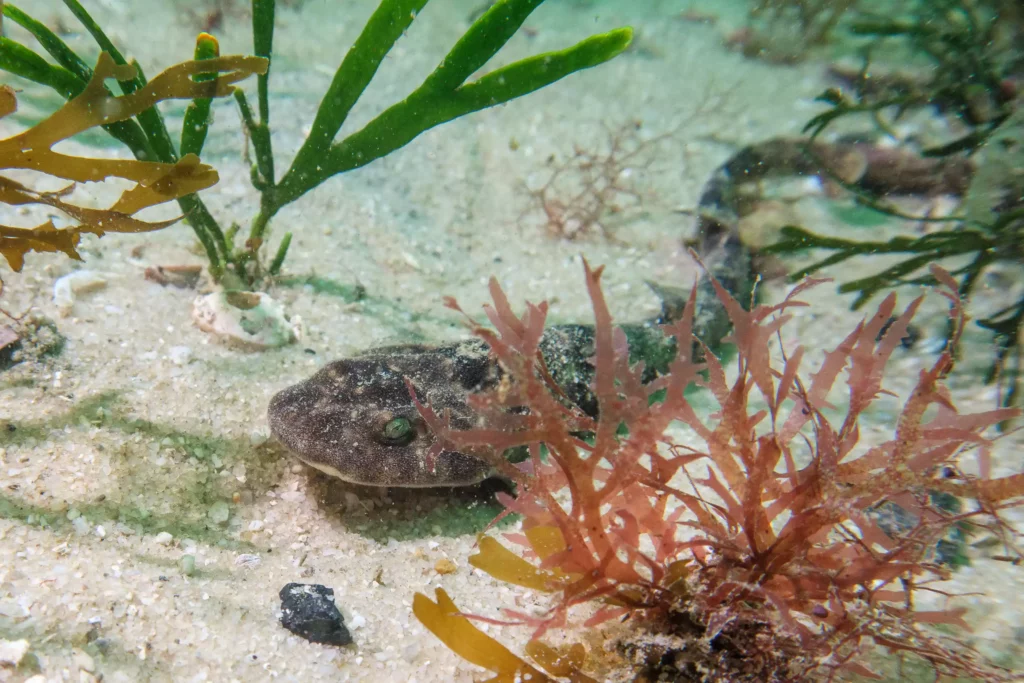
It was on the way to the wreck that I realised my flashes and camera battery were not very high after the first dive of the day, and some images were entirely tried unlit, and very green, tried to edit them in Lightroom and Photoshop, but I didn’t like the results. Davinci Resolve now has a dedicated photo feature, and I tested it out, achieving some more success. I will update this blog post here when I get around to making a separate blog on editing images in Davinci vs Adobe.
We made it to the wreck eventually, convered in life as expected. Now the hunt began for nudibranchs, and anything else thats small. It was successful, with nudibranchs, flatworms, and eggs.
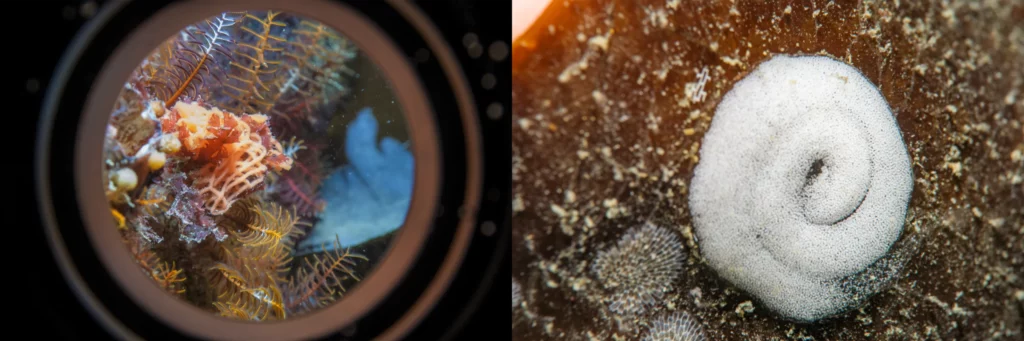
And where there are eggs, there are egg layers!
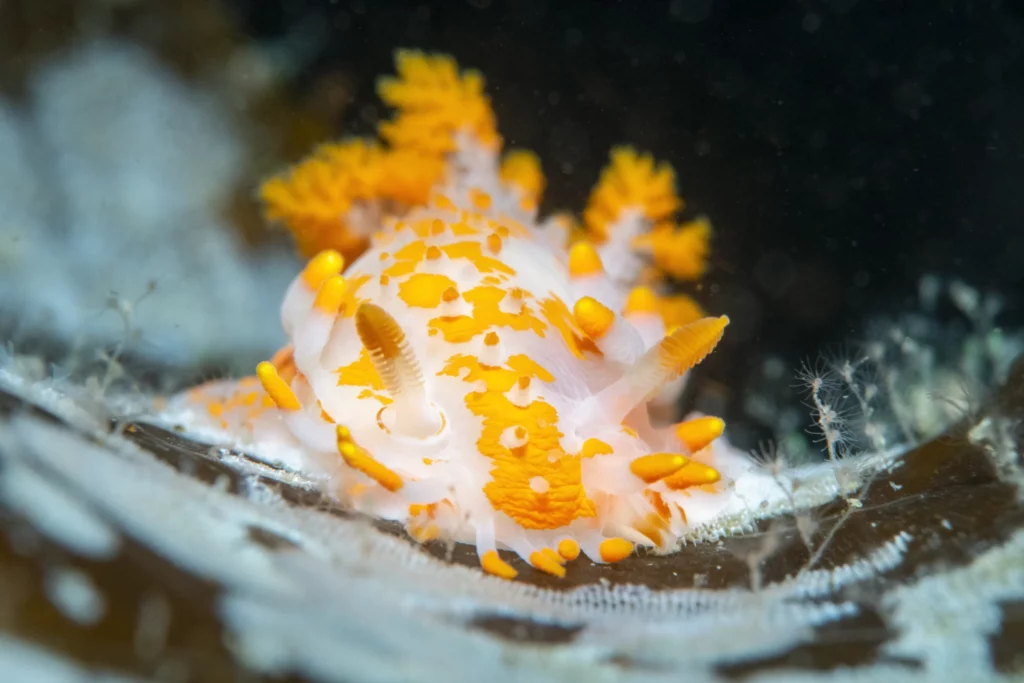
This is my first proper macro photograph on the Canon G7X II with the Nauticam SMC-1. Compared to the Canon G16, it seemed to me that there is less overall magnification. I am currently testing the 2 cameras to see how the magnification changes over focal ranges, as each camera has different focal lengths with different focal distance steps.
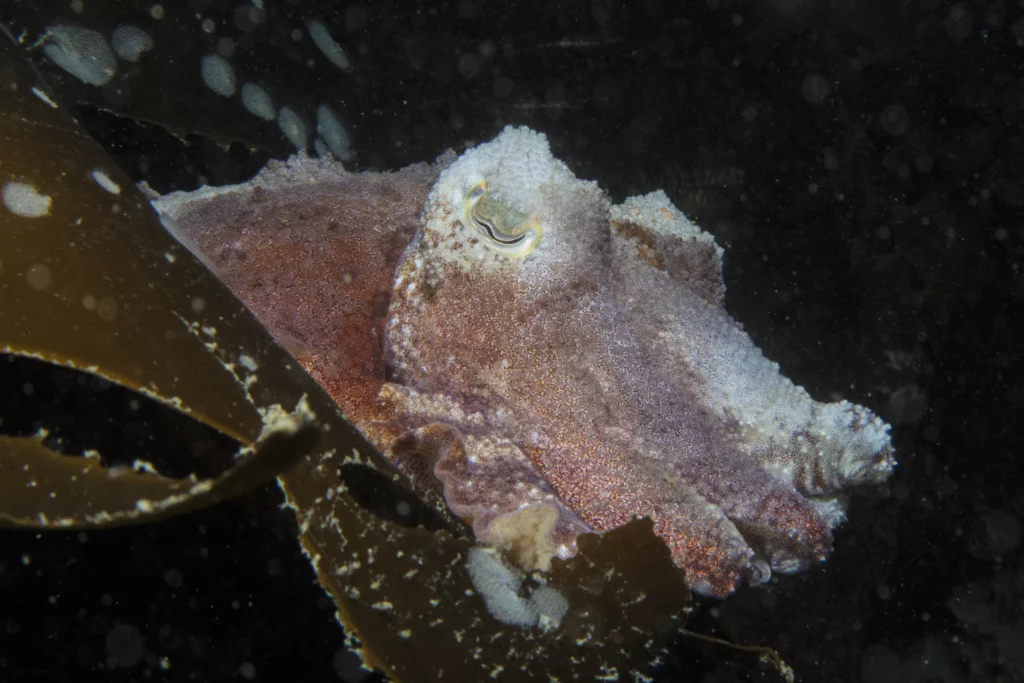
At the very end of the dive, just as we were about to make our way back to the beach, I spotted a very well camouflaged cuttlefish hanging about at the top of the wreck.
Lessons learned from the day diving, bring spare batteries for my flashes, and bring a powerbank to charge my camera up even a little bit inbetween dives